Forget-Me-Not Flower Meaning and Symbolism, Plus How to Grow Forget Me Nots from Seed
Learn the meaning of forget me not flowers, from true love and remembrance to a German legend, and how to grow them from seed in shade.
· 3 min read
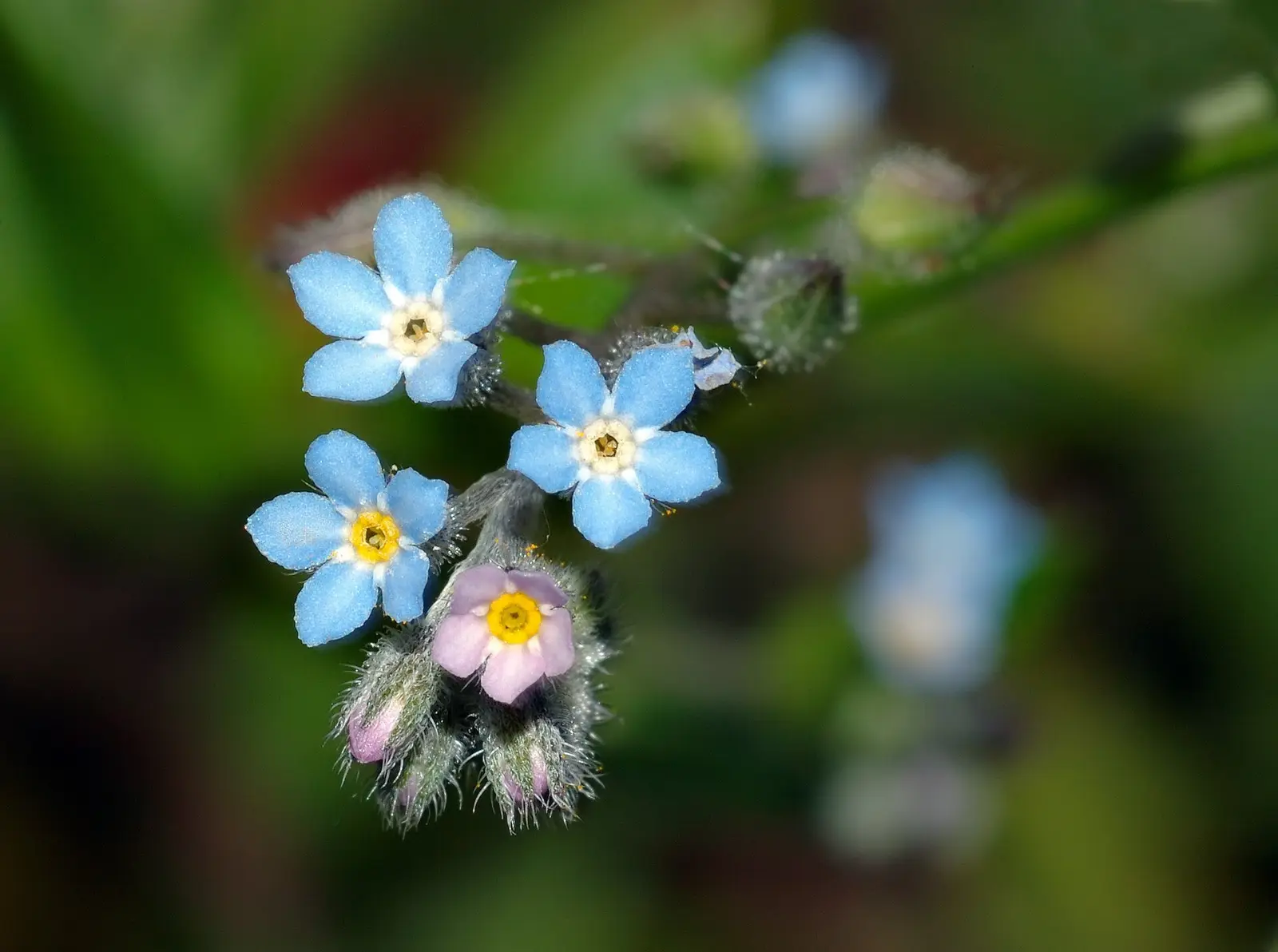
Spelled with or without its hyphens, the forget me not flower is small but has one of the longest memories in the garden. For hundreds of years each bright blue bloom with a yellow eye has stood for love and remembrance, and in spring the plants form soft clouds beneath trees, along paths and around ponds. This guide explains what the flower means, where the symbolism comes from, and how to plant forget-me-nots so they return year after year. Any gardener can grow them, because the plants are easy to grow.
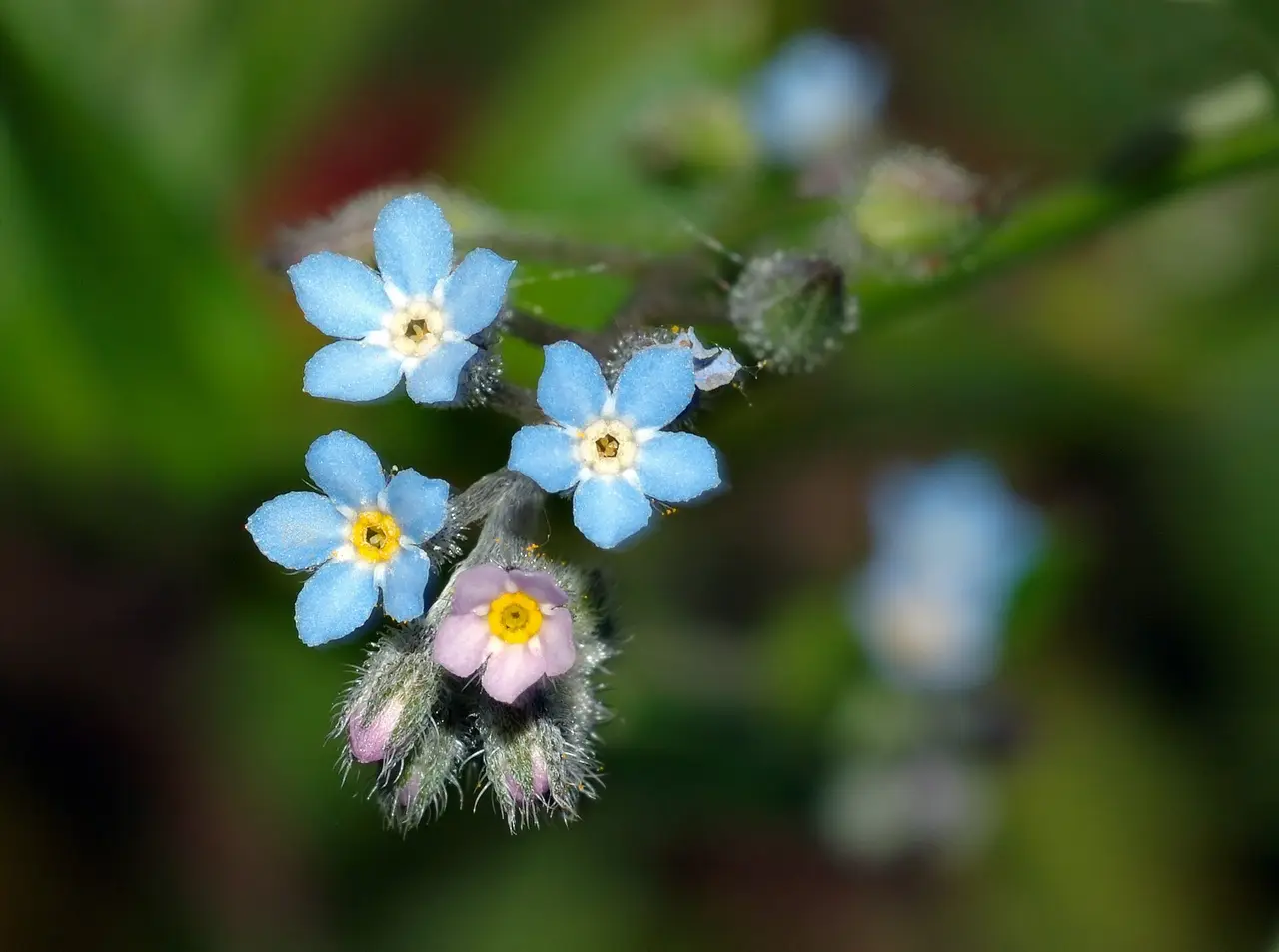
Photo: André Karwath aka Aka, CC BY-SA 2.5, via Wikimedia Commons
Forget-me-not meaning and symbolism
The forget-me-not is an emblem of remembrance, true love and fidelity. To give the flower is a token that says you will not be forgotten, which is why it is chosen for loved ones who are far away or who have died. A blue forget-me-not is also said to symbolize loyalty, and a tattoo of the flower usually honors someone who has died.
The German legend and the language of flowers
An old legend explains the name. In the story a knight walking beside a river with his lady picked a bunch of small blue flowers from the bank, slipped, and was carried off by the water. As he was swept away he threw the flowers to her and called out “forget me not.” The tale is probably older than the Victorian era, but the Victorians made the flower a favorite in their language of flowers, where it stood for loyalty and constancy. Today the forget-me-not also helps raise awareness of dementia, and it is the symbol of the Alzheimer’s Society in the United Kingdom.
Botanical details: Myosotis sylvatica and flower colors
Forget-me-nots belong to the genus Myosotis, a name from the Greek for mouse ear that describes the soft, small leaves. The best-known garden species is a plant of the forest floor that forms low clumps about 6 to 12 inches tall. Each cluster of tiny blue flowers has a yellow center, and every rounded petal is held in a ring of five, and the hue ranges from a clear sky blue to a deeper blue color. Pink and white forms also exist, though the classic shade of blue is the one everyone knows. A related species, Myosotis scorpioides, is the water forget-me-not, which grows in wet places near streams.
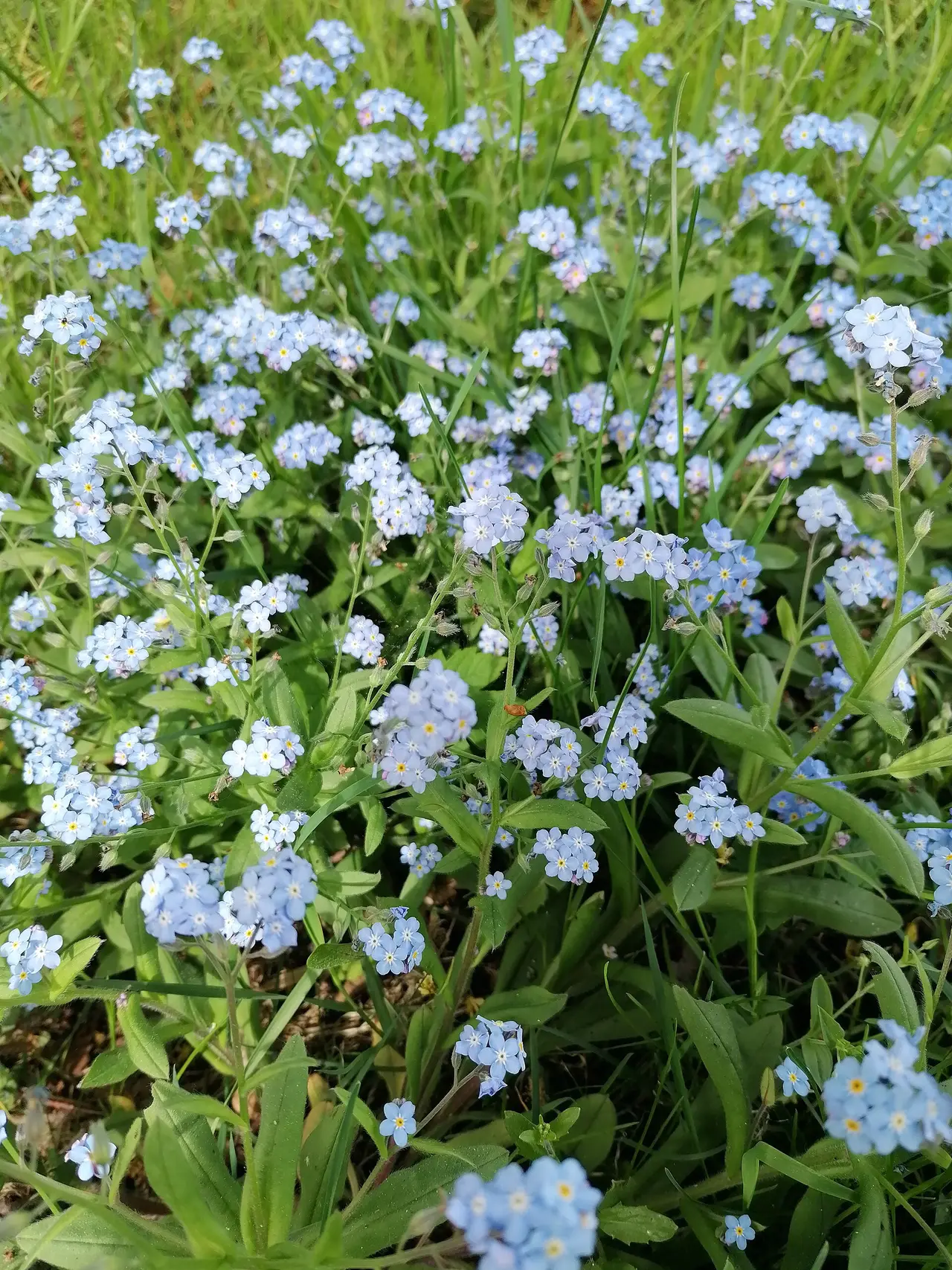
Photo: Abraham, CC BY 4.0, via Wikimedia Commons
Best in cool shade: where the forget me not flower grows
Forget-me-nots grow well where other plants struggle. Forget-me-nots are biennials or short-lived perennial plants, and they spread prolifically by self-seeding, so a patch behaves like a perennial and one clump can become a drift. They like cool conditions, and they prefer a shady or partly shaded spot with organically rich soil that stays consistently moist. They endure full sun only if the ground never dries out, so damp corners, woodland edges and the banks of ponds suit them.
Planting forget-me-nots from seed, indoors or outside
To plant seeds outdoors, sow your seeds in early spring as soon as the soil can be worked, or scatter seeds in fall so that the plants flower the following spring. Planting depth matters little: press them onto the surface of raked ground, cover them with a thin dusting of soil and keep the bed watered. Seedlings should appear within two to three weeks. For earlier flowers, start seeds inside six to eight weeks before the last frost date, and move the seedlings out once the weather has settled. Can forget-me-nots be grown in containers? Yes, planting in pots works if the pot never dries out, and a blue flower that tolerates shade is welcome on a north-facing patio.
Care tips for a prolific spring bloom
Water forget-me-nots in dry spells, and a gardener who wants them back next year should let some flowers set seed. After the bloom fades, pull out the tired plants and shake the dry flower heads over the bed. The plant is considered invasive in a few regions, so pull unwanted seedlings while they are small.
These spring-flowering forget-me-nots make good companions for tulips, daffodils and other spring bulbs, covering the fading leaves of each bulb with a haze of blue just as it finishes. For more blue flowers that thrive in similar conditions, see our guide to blue flowers.
Priya Raman shares guides to flowers from around the world.